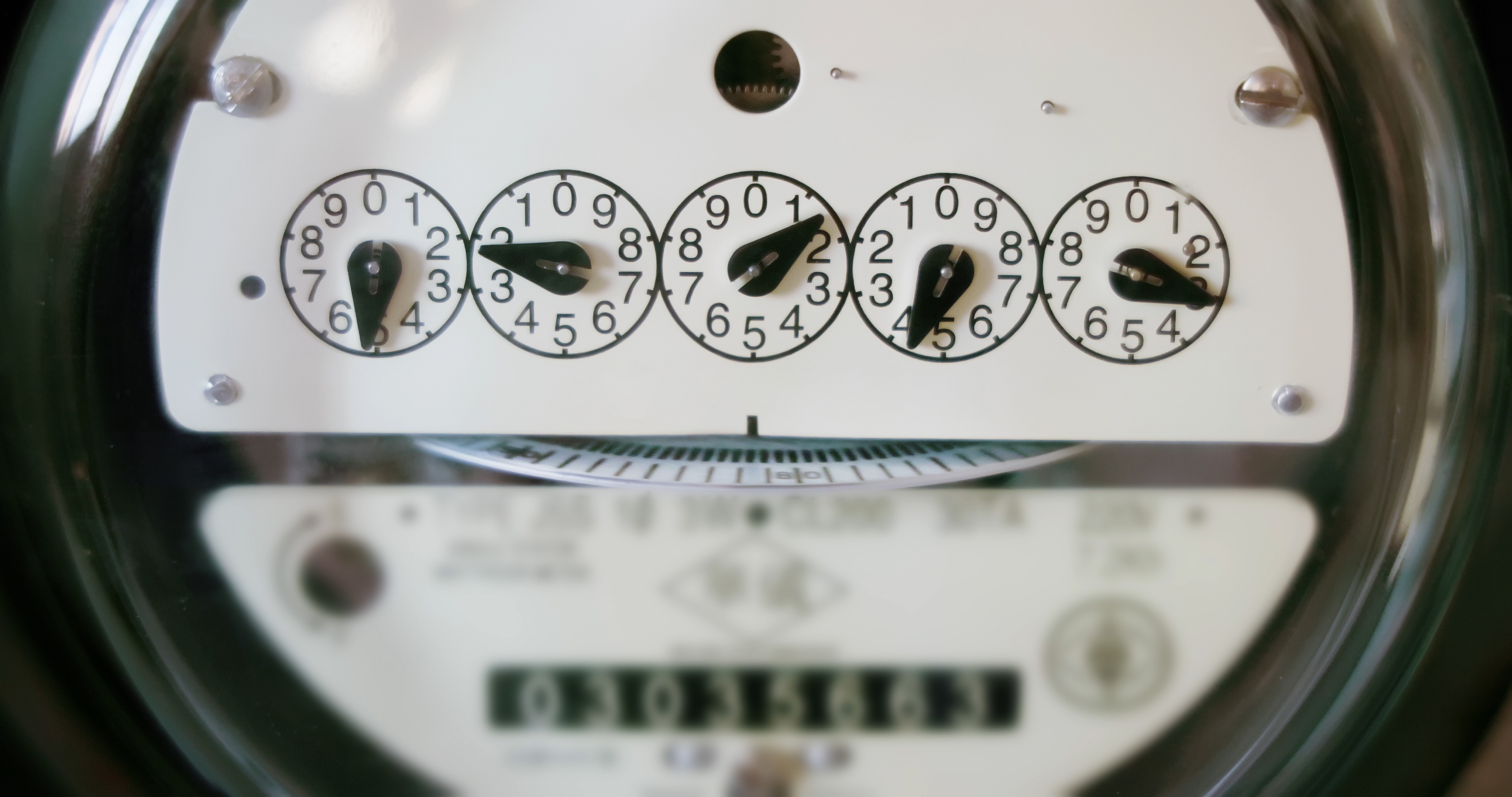
Across the United States, local governments are facing an energy challenge that has been building for years and is now impossible to ignore. Municipal facilities (city halls, public safety buildings, water treatment plants, community centers, and emergency shelters) run continuously and serve populations that depend on them most during the exact moments when the grid is most likely to fail. Extreme weather events, aging transmission infrastructure, and rapidly growing electricity demand from AI and electrification are combining to make grid dependence a liability that local officials can no longer afford to treat as someone else's problem.
The good news is that the federal funding landscape has shifted meaningfully in the past two years, and municipalities that understand how to navigate it are finding that energy independence is more financially accessible than it has ever been.
The Municipal Energy Problem Is Structural, Not Incidental
When a city loses power, the consequences are not distributed evenly across the community. Emergency services, water and wastewater treatment, traffic management, and public shelters are the functions that communities depend on most during a crisis, and they are precisely the functions that are most disrupted when backup power systems are inadequate or nonexistent.
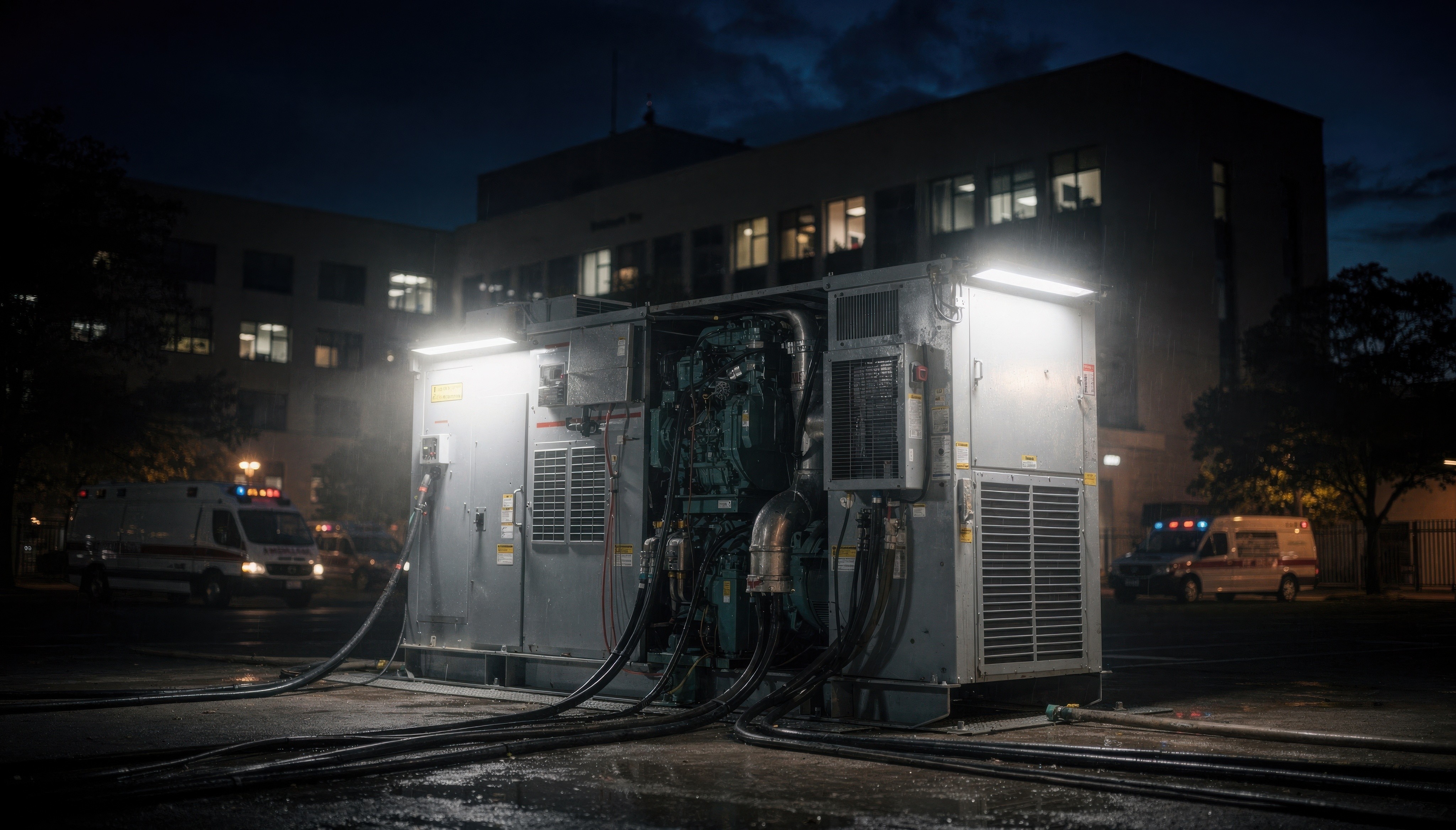
Most municipal facilities were built with utility grid power as the assumed baseline and diesel generators as emergency backup. That model has two significant weaknesses. Diesel generators require fuel delivery that may be disrupted during the same weather event causing the outage. They also take 30 to 45 seconds to start, during which critical systems like traffic signals, communications equipment, and facility HVAC lose power entirely. For a public safety answering point or an emergency operations center, that gap is operationally unacceptable.
Beyond resilience, municipalities face the same peak demand charge exposure that affects commercial and industrial facilities. City facilities with large HVAC loads, pumping stations, and high-draw equipment pay demand charges that can represent 30-40% of their total electricity bills. These charges appear on utility invoices regardless of how well the facility is managed in aggregate. They are determined by a single 15-minute peak window per billing period, often during summer cooling peaks or periods of heavy equipment operation. For a mid-size municipality managing dozens of facilities across a service area, the cumulative demand charge exposure across the portfolio can reach millions of dollars annually.
What Federal Funding Is Available Right Now
The federal funding environment for municipal clean energy and microgrid projects is the most favorable it has been in decades, and several specific programs are worth understanding in detail.
The Community Microgrid Assistance Partnership (C-MAP), administered through the Department of Energy's Office of Electricity, recently announced a new funding opportunity offering up to $2.5 million in direct project funding and approximately $1 million in technical assistance for microgrids serving remote or underserved communities. Eligible applicants include state and local governments, federally recognized tribal nations, nonprofit entities, and U.S. businesses. Proposals for this round are due July 2, 2026, making it an immediate opportunity for municipalities that are ready to move.
The Inflation Reduction Act's direct pay provisions represent a more broadly applicable opportunity. Prior to the IRA, state and local governments could not benefit directly from federal clean energy tax credits because they do not pay federal income taxes. The IRA changed this by allowing tax-exempt entities, including municipalities, to receive clean energy incentives as direct cash payments rather than tax offsets. The Investment Tax Credit for solar and battery storage is currently 30% of project cost, with additional adders available for projects in energy communities, projects using domestically manufactured equipment, and projects serving low-income communities. For a municipal microgrid project in a qualifying geography, the effective federal incentive coverage can reach 50-60% of direct project costs.
USDA Rural Energy for America Program (REAP) grants and loan guarantees are available to rural municipalities and public utilities for renewable energy and energy efficiency projects. REAP can cover up to 25% of eligible project costs through grants and a significant additional portion through guaranteed loans, making it a useful complement to ITC direct pay for rural and small-town municipal projects.
DOE Grid Resilience and Innovation Partnerships (GRIP) program funding, while competitive, has supported a number of municipal and utility microgrid deployments and remains an avenue for larger-scale projects with demonstrated grid resilience benefits.
Understanding how these programs interact, and how to structure a project that maximizes capture across multiple funding streams simultaneously, is one of the most important and underappreciated aspects of municipal microgrid project development. A project structured without attention to incentive stacking will leave significant funding on the table.
What a Municipal Microgrid Actually Looks Like
A municipal microgrid is not a single system for a single building. For most local governments, the most effective approach is a portfolio strategy: identifying the facilities with the highest criticality, the highest energy costs, and the best physical conditions for solar and storage deployment, and prioritizing those for the first phase of deployment.
Public safety buildings (police stations, fire stations, and emergency operations centers) are typically the highest-priority targets because their operational continuity requirements are absolute. Water and wastewater treatment facilities are close behind, since loss of power at these facilities creates public health consequences that extend far beyond the outage event itself. Community centers and schools that serve as emergency shelters during weather events are increasingly being prioritized in municipal resilience planning, particularly in regions with high exposure to hurricanes, winter storms, or extreme heat.
For each facility, the microgrid architecture integrates on-site energy generation, battery storage, and an intelligent control system that manages how power flows in real time. During normal operations, the system reduces energy costs through solar generation and demand charge management. During grid outages, it islands within milliseconds, maintaining continuous power to critical loads without the gap of a generator startup. The transition is seamless from the perspective of building occupants and equipment.
Across a portfolio of facilities, a distributed energy resource management system provides the municipality with unified visibility into energy generation, consumption, storage levels, and grid conditions at every site simultaneously. This visibility enables portfolio-level optimization, coordinating energy across facilities rather than managing each one in isolation, and provides the data infrastructure for participation in demand response programs that can generate additional revenue for the municipality.
The Geographic Dimension: Where the Opportunity Is Largest
While municipal microgrid deployments are happening across the country, certain regions face a combination of grid stress, high energy costs, and strong federal incentive eligibility that makes the opportunity particularly compelling right now.
The Southeast: Florida, Georgia, the Carolinas, and the Gulf Coast states combine high hurricane exposure with aging distribution infrastructure and summer peak demand that drives significant demand charge exposure. Florida municipalities in particular are operating under a state regulatory environment that increasingly supports distributed energy deployment following a series of significant storm-related grid failures.
The Southwest and Mountain West: Arizona, New Mexico, Colorado, Nevada, and parts of California face extreme heat events that stress both the grid and municipal facilities simultaneously, strong solar resources that improve project economics, and significant populations of rural and tribal communities that qualify for C-MAP and REAP funding.
Alaska and remote U.S. territories represent the most acute need for municipal microgrid deployment. Many Alaskan communities pay electricity rates of $0.50 to $1.00 per kilowatt-hour or more, rely entirely on diesel generation with fuel that must be flown or barged in, and have no connection to any larger grid. For these communities, a microgrid is not an optimization. It is the path from energy poverty to energy independence.
Rural municipalities across the Midwest and Great Plains: particularly those served by aging rural electric cooperative infrastructure, face growing grid reliability challenges that are compounding as investment in rural transmission lags behind urban and suburban areas.
What NextNRG Brings to Municipal Deployments
NextNRG designs and deploys AI-driven microgrid systems for municipalities, tribal nations, and community organizations across the United States. Our platform is built for the operational complexity of public sector deployments, where energy management must serve multiple facilities, multiple stakeholders, and mission-critical functions simultaneously.
Our AI-driven forecasting engine provides site-specific energy generation and load forecasts that enable proactive battery dispatch rather than reactive response. For a municipal portfolio spanning multiple facilities with different load profiles and schedules, this forecasting capability is what enables consistent demand charge reduction across the entire portfolio rather than facility by facility. The Next Utility Operating System (UOS) manages real-time energy optimization across solar generation, battery storage, and grid power at utility scale, coordinating dispatch decisions automatically based on real-time conditions across an entire municipal service area. Our Microgrid Controller provides millisecond islanding capability that protects critical public facilities during grid events, and our DERMS platform gives municipalities unified visibility and control across all sites in their energy portfolio.
We help municipal clients understand the full federal incentive landscape, structure projects to maximize funding capture, and develop business cases that can withstand the scrutiny of elected officials, finance departments, and public stakeholders. The combination of federal funding availability and mature microgrid technology has created a window for municipal energy independence that did not exist even five years ago.
Contact the NextNRG team at nextnrg.com to discuss what an energy independence strategy looks like for your municipality or community.
Federal incentive availability and program terms are subject to change. This post references publicly available information about federal funding programs and is for informational purposes only. It does not constitute legal, financial, or regulatory advice. Consult qualified advisors before making energy infrastructure investment decisions. NextNRG, Inc. (NASDAQ: NXXT).
Don’t Miss Out
Join our newsletter to get latest insights for your brand growth!