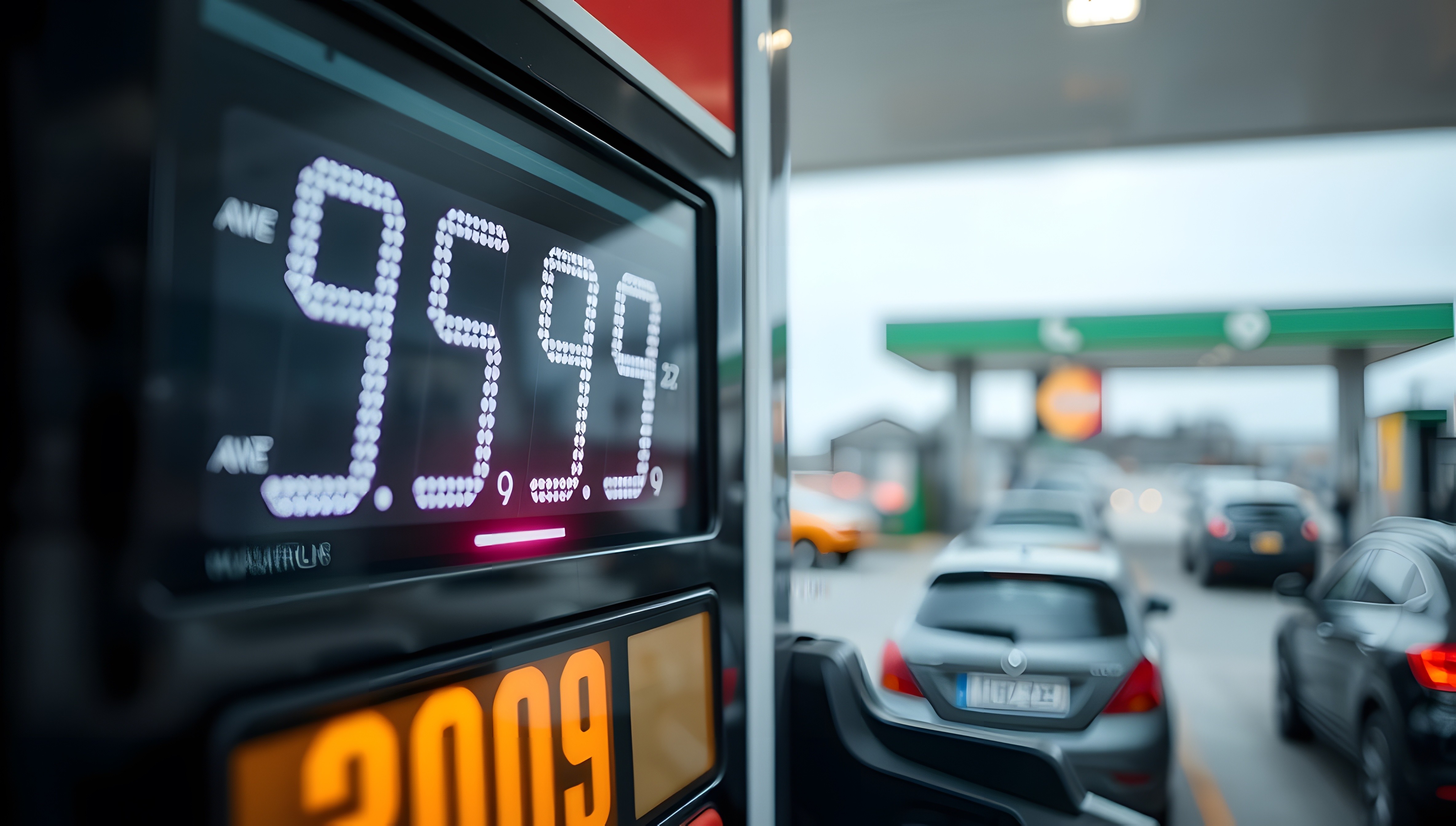
After briefly easing in June, gasoline prices are climbing again. The national average for regular gasoline has risen to nearly $3.90 per gallon, while drivers in states like California continue to pay more than $5.00 per gallon. Although prices at the pump can appear to change overnight, the forces behind those swings are increasingly structural rather than temporary.
Several long-term market dynamics, combined with ongoing geopolitical uncertainty, are contributing to today's fuel price volatility. Understanding these factors helps explain why fluctuating gasoline prices are likely to remain a defining feature of the market for the foreseeable future.
The Strait of Hormuz Factor
One of the most immediate drivers of fuel price volatility in 2026 has been geopolitical uncertainty surrounding the Strait of Hormuz, a narrow waterway through which roughly one-fifth of the world's oil supply passes. Heightened tensions in the region pushed crude oil prices sharply higher during the spring, contributing to a national gasoline average that peaked above $4.50 per gallon in May. While prices eased as diplomatic signals improved in June, renewed uncertainty has contributed to another upward trend in July.
Oil markets react to expectations as much as actual supply. Diplomatic developments, military activity, and even the perceived risk of disruption can move crude prices long before any physical shortage occurs. That means prices at the pump often reflect what traders believe could happen next, not just what's happening today.
For consumers and businesses trying to manage fuel costs, this creates a significant challenge. Prices are influenced not only by current inventories and refinery output but also by constantly changing expectations about future supply, making sudden price swings increasingly common.
The Supply Side Is More Constrained Than It Looks
Beyond geopolitical risk, the U.S. gasoline market faces structural supply constraints that have developed over the past several years.
Domestic refinery capacity has not fully recovered from closures that occurred during the COVID-19 pandemic. Several facilities permanently shut down, and few new refineries have been built to replace that capacity. As demand recovered, the remaining refineries have consistently operated at high utilization rates, leaving little room to quickly increase production when demand spikes or unexpected disruptions occur.
Seasonal fuel requirements further tighten supply. During the summer months, many regions require specially formulated gasoline blends designed to reduce evaporative emissions. These fuels can only be produced by refineries equipped to manufacture them, limiting flexibility and creating the potential for regional price spikes even when national fuel inventories appear healthy.
Demand Has Evolved More Slowly Than Expected
One of the more surprising aspects of today's fuel market is that gasoline demand has remained stronger than many analysts anticipated.
While passenger electric vehicle adoption continues to grow, transportation fuel demand remains heavily influenced by commercial fleets, construction equipment, agriculture, aviation, and long-haul trucking, sectors that are significantly more difficult to electrify than personal vehicles. The infrastructure, charging requirements, and operational realities for these industries make the transition considerably more complex.
As a result, gasoline demand has softened in some consumer markets while remaining resilient across many commercial applications. Total fuel consumption has declined more gradually than early forecasts suggested, leaving the market more vulnerable to supply disruptions and price volatility.
What Price Volatility Reveals About the Energy Transition
The current fuel price environment highlights one of the less-discussed realities of the energy transition: moving from one energy system to another is unlikely to be a smooth or linear process.
Investment in new fossil fuel production has slowed as long-term demand expectations evolve, while large-scale investments in renewable generation, battery storage, electric vehicle infrastructure, and grid modernization are still underway. During this transition, both systems must effectively operate in parallel. The result is a period where supply constraints can emerge before replacement infrastructure is fully built, increasing the likelihood of price volatility.
This is not an argument against the energy transition. Rather, it reflects the practical realities of transforming an energy system that has developed over more than a century. Markets continue to adjust to shifting investment patterns, evolving technologies, changing consumer behavior, and geopolitical events, all of which contribute to uncertainty in energy pricing.
Looking Beyond the Pump
For businesses, municipalities, and fleet operators, fuel price volatility is more than an inconvenience. It reinforces the importance of diversified energy strategies that improve resilience, reduce exposure to commodity price swings, and provide greater long-term cost predictability.
Whether through onsite energy generation, battery storage, fleet optimization, or other resilient energy infrastructure investments, planning for volatility is becoming just as important as planning for efficiency. As the energy transition continues, organizations that proactively manage energy risk will be better positioned to navigate an increasingly dynamic market.
Gas prices are often viewed as a simple consumer expense, but they also serve as a barometer of broader changes occurring across the global energy system. Understanding the forces behind today's price swings can help businesses make more informed decisions as that transition continues to unfold.
To learn more about how NextNRG is building energy infrastructure for this environment, visit nextnrg.com.
Fuel price data sourced from AAA and the U.S. Energy Information Administration, July 2026. This post is for informational purposes only. NextNRG, Inc. (NASDAQ: NXXT).
Don’t Miss Out
Join our newsletter to get latest insights for your brand growth!