The electric vehicle industry just received a significant signal. Tesla recently announced that its upcoming Cybercab autonomous vehicle will rely exclusively on wireless charging, foregoing the traditional physical plug entirely. Porsche has introduced the same capability on the Cayenne and Cayenne Coupe, bringing wireless charging to one of the most commercially successful luxury SUV lines in the world. When technology moves from autonomous fleet vehicles to mainstream consumer and commercial platforms simultaneously, it is no longer a niche application, it is an infrastructure shift.
The direction the industry has been moving toward for several years is now unmistakable: wireless charging is transitioning from a premium feature to a practical standard for high-utilization electric fleets. For fleet operators evaluating their long-term charging strategy, this shift deserves attention now, before the hardware has already arrived at your competitors' depots.
The Problem Wireless Charging Is Solving
The traditional plug-in charging model works reasonably well for low-utilization vehicles. For commercial fleets that need to maximize time on the road, it creates operational problems.
The core issue is what operators sometimes call the "plug-in penalty". Fleet charging at scale requires significant physical infrastructure, dedicated staff to manage the plugging and unplugging process, and extended stationary periods that pull vehicles off routes. Physical connectors are subject to wear, damage, theft, and compatibility issues across vehicle types. And as fleets grow, the labor and logistics overhead of managing a plug-based charging operation grows with it.
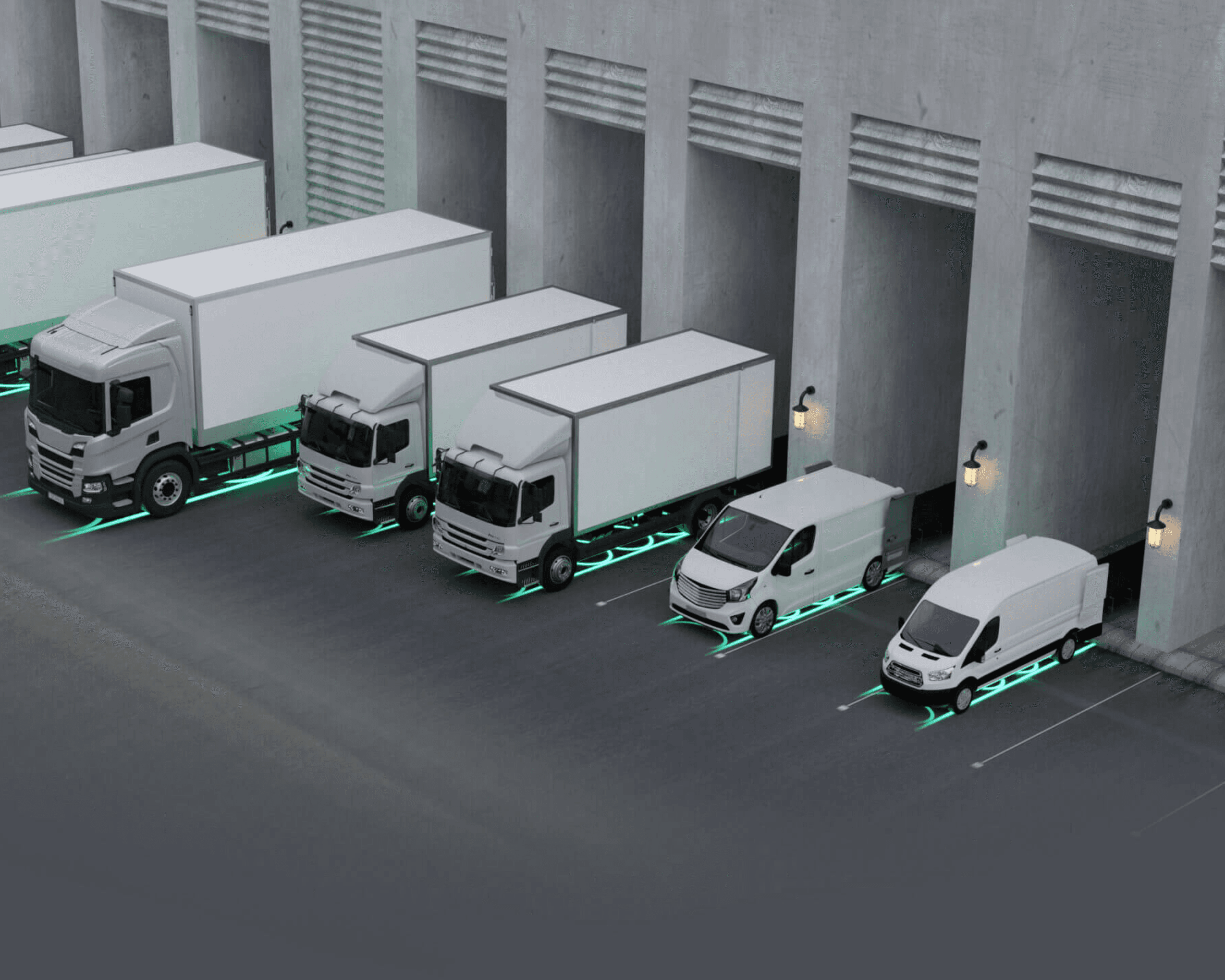
Induction charging addresses these problems by eliminating the physical connection entirely. Vehicles charge by parking or driving over a pad, with no manual intervention required. For autonomous and semi-autonomous fleets, this is not just a convenience feature, it is a prerequisite for the kind of continuous, low-touch operations that make electric fleet economics work.
The broader implications go further. Wireless charging enables opportunity charging: frequent, shorter charging sessions throughout a vehicle's operational day rather than one long overnight session. This approach can meaningfully reduce the battery capacity a vehicle needs to carry, which affects vehicle weight, cost, and range calculations across an entire fleet.
The Infrastructure Challenge Nobody Is Talking About
The infrastructure behind EV charging is where most fleet electrification plans fall short. Deploying charging hardware at fleet scale must be paired with a comprehensive energy management strategy in order to deliver its full value. Multiple vehicles charging simultaneously create demand spikes that, without intelligent coordination, translate directly into higher peak demand charges on the utility bill. Charging pads need to be supplied with power that is reliable, cost-optimized, and ideally sourced from on-site generation where available.
The grid cannot always be assumed to absorb additional fleet load without consequence. In many markets, grid interconnection queues for new large-load connections run one to three years. Facilities adding significant EV charging capacity without on-site generation and storage face both timeline risk and cost risk.
The fleet operators who get this right will not be the ones who install the most advanced hardware. They will be the ones who integrate that hardware with an energy system intelligent enough to manage when and how each vehicle charges, based on real-time grid conditions, energy pricing, and operational schedules.
The Transition Period Is the Underestimated Challenge
Another aspect of the wireless charging shift that receives less attention than it deserves is the transition period. Most commercial fleets today are not fully electric. They are mixed fleets, often including conventional fuel vehicles, hybrid vehicles, and an expanding cohort of EVs at various stages of adoption.
Managing a mixed fleet during electrification means running two parallel operational systems simultaneously. Conventional vehicles still need fuel and electric vehicles need charging infrastructure that may not yet be fully built out. The operational complexity during this transition is real and often underestimated in fleet electrification planning.
EzFill, NextNRG's mobile fuel delivery service, is designed specifically for this transition period. Rather than requiring fleet vehicles to leave routes to refuel at traditional stations, EzFill delivers fuel directly to fleet locations on a scheduled basis. For a mixed fleet in the process of electrifying, this eliminates one source of operational disruption while the electric charging infrastructure is being built and integrated.
The combination of mobile fuel delivery for conventional vehicles and intelligent wireless charging infrastructure for EVs gives fleet operators a coherent path through the transition rather than a disruptive jump from one system to another.
What Intelligent Wireless Charging Infrastructure Looks Like
A well-designed wireless charging deployment for a commercial fleet integrates three layers.
The first layer is the physical charging hardware: induction pads sized and positioned for the specific vehicles in the fleet, with power delivery matched to operational requirements.
The second layer is on-site energy infrastructure. Solar generation and battery storage provide the ability to charge vehicles during low-cost or self-generated power windows, reducing dependence on grid peak pricing and insulating the operation from grid instability. The NEC 2026 changes to Power Control System requirements have made it significantly easier and less expensive to deploy exactly this kind of integrated solar, storage, and EV charging system at a logistics or fleet facility.
The third layer is the intelligence layer. NextNRG's AI-driven microgrid controller coordinates the interaction between on-site solar generation, battery storage, grid power, and vehicle charging in real time. It anticipates demand based on fleet schedules, optimizes charge timing to minimize peak demand charges, and dispatches battery storage to maintain charging continuity during grid events. RenCast, NextNRG's forecasting platform, feeds the controller with site-specific solar generation forecasts so the system prepares for generation variability rather than reacting to it.
The result is a fleet charging operation that runs continuously, responds to real-time energy conditions automatically, and captures the cost advantages that make electric fleet economics compelling over the long term.
Bidirectional Charging: The Next Requirement Fleet Operators Need to Plan For
Transitioning to wireless charging addresses one part of the infrastructure challenge. The next requirement fleet operators will face is bidirectional capability, and it is already being written into law.
Bidirectional charging enables vehicles to send power back to a building, a facility, or the grid itself, not just receive it. A fleet equipped with this capability becomes, in effect, a distributed energy asset. Vehicles can absorb excess solar generation during midday production peaks and return power to the facility or grid during evening demand peaks. For a fleet operator with on-site solar and storage already in place, bidirectional charging transforms the vehicle fleet from a passive load into an active component of the facility's energy system.
The legislative momentum behind this technology is significant and accelerating. California's SB 233 requires all electric vehicles and chargers sold in the state to support bidirectional charging capability starting January 1, 2027. At the federal level, the Bidirectional Electric Vehicle Charging Act proposes making bidirectional capability standard on all new U.S. electric vehicles by model year 2029, with provisions to incorporate the technology into federal emergency management planning. Maryland enacted the DRIVE Act in 2024, becoming the first state to establish programs enabling EVs to supply electricity back to homes, businesses, and the grid. Germany amended its Energy Industry Act in November 2025 to facilitate Vehicle-to-Grid adoption, making it commercially viable as of 2026.
These are not distant regulatory possibilities. They are active legislative requirements taking effect within the next two to three years in markets that consistently set the standard for the rest of the industry.
NextNRG recognized this trajectory early. The company holds a patent on bidirectional wireless charging technology, developed with the understanding that wireless and bidirectional capability are not two separate trends arriving at different times. They are the same infrastructure transition, and they are arriving together. Fleet operators and facility managers who plan their charging infrastructure around this convergence now will not need to retrofit or replace systems when bidirectional mandates take effect.
The combination of NextNRG's patented bidirectional wireless charging technology and its AI-driven microgrid platform creates a fully integrated energy system for fleet operations: vehicles charge intelligently based on real-time generation and grid conditions, discharge when the facility or grid benefits from it, and participate in demand response and capacity programs that generate revenue rather than simply consuming it.
What Fleet Operators Should Be Doing Now
Wireless charging infrastructure at commercial scale is not a two-month project. The planning, permitting, grid interconnection, and system integration work takes time, and the operators who start that process now will be the ones with functional infrastructure when the hardware is ready to deploy at scale.
A few practical starting points. Model your current fleet's energy consumption and peak demand profile before specifying hardware. Understand your utility rate structure and where demand charges are eating into operational economics. Evaluate whether on-site solar and storage can reduce your interconnection requirements and improve your charging economics. And plan your transition timeline with the mixed-fleet period in mind. The gap between your first EV deployment and your last conventional vehicle retirement is where most fleet electrification plans run into operational friction.
NextNRG works with fleet operators and logistics facilities to design the full energy stack: mobile fueling for the transition period, microgrid infrastructure for on-site generation and storage, and intelligent control systems for coordinated wireless EV charging. Contact the NextNRG team at nextnrg.com to discuss what that looks like for your operation.
This post references Tesla's publicly announced Cybercab product and Porsche's Cayenne and Cayenne Coupe wireless charging capability. NextNRG has no affiliation with or endorsement from Tesla or Porsche. Performance outcomes for fleet charging deployments vary based on facility, location, utility rate structure, and operational profile. This post is for informational purposes only and does not constitute investment advice. NextNRG, Inc. (NASDAQ: NXXT).
Don’t Miss Out
Join our newsletter to get latest insights for your brand growth!