When the grid fails at a warehouse, operations stop and costs mount. When the grid fails at an assisted living facility, the consequences are immediate, irreversible, and in some cases fatal.
Residents in assisted living and senior care facilities are among the most vulnerable populations in any community. Many depend on powered medical equipment: oxygen concentrators, powered wheelchairs, electric beds, medication refrigeration. Most cannot self-evacuate. Many have cognitive conditions that make emergency procedures traumatic and disorienting. And unlike acute care hospitals, many assisted living facilities operate under regulatory frameworks that do not mandate the same level of backup power infrastructure that hospitals are required to maintain.
That gap, between the life safety requirements of the population and the backup power standards applied to the facilities serving them, is one of the most underaddressed risks in senior care operations. And as the U.S. grid faces mounting pressure from AI infrastructure, electrification, and aging transmission equipment, the frequency and duration of grid outages is increasing, not declining.
The Regulatory Landscape and Where the Gaps Exist
Acute care hospitals are required by CMS Conditions of Participation to maintain emergency power systems capable of supporting critical loads within 10 seconds of a grid failure. The standards are detailed, inspected, and enforced.
Assisted living facilities operate under a different and significantly less uniform framework. Regulations vary substantially by state. Some require basic generator backup for common areas and certain medical equipment, others have more limited requirements, and enforcement varies widely. The result is a sector where backup power adequacy is inconsistent across facilities, and where operators often discover the gaps in their systems during an actual emergency rather than during a compliance review.
The Joint Commission does not accredit most assisted living facilities the way it accredits hospitals, removing another layer of backup power oversight that acute care facilities are subject to. And while CMS has expanded its emergency preparedness rules for long-term care facilities in recent years, those rules focus primarily on emergency planning processes rather than mandating specific backup power capabilities.
For operators and CFOs evaluating their facilities' energy resilience, the practical implication is clear: regulatory compliance is a floor, not a ceiling. The question is not whether your facility meets minimum requirements. It is whether your backup power infrastructure can actually protect your residents during the kinds of grid events that are becoming more frequent.
What a Grid Outage Actually Costs an Assisted Living Facility
The life safety dimension of grid outages in senior care is the most important consideration. It is also worth understanding the financial exposure, because the business case for energy resilience investment is compelling independent of the moral imperative.
A grid outage at an assisted living facility creates cascading operational and financial consequences. Generator fuel costs for extended outages can run thousands of dollars per day. Staff overtime to manage emergency protocols, monitor residents, and operate manual backup systems adds significant labor cost. If temperature control is lost, with HVAC systems running on limited backup power, facilities may need to arrange emergency transportation for vulnerable residents, a logistically complex and expensive undertaking.
Regulatory consequences can follow. State health departments investigate significant emergency events at licensed facilities. Deficiency citations, corrective action plans, and in serious cases, fines or license restrictions are possible outcomes when investigations find that backup power systems were inadequate or that emergency protocols were not followed.
The reputational dimension is equally significant. Families choosing assisted living facilities for their loved ones increasingly research facility safety records. An emergency event that becomes public, through local news, state licensing records, or social media, can affect occupancy rates and new resident acquisition for years.
For a facility operating at 85-90% occupancy with average monthly fees of $5,000 to $7,000 per resident, even a modest occupancy impact following a publicized emergency event represents hundreds of thousands of dollars in annual revenue impact. The financial case for investing in reliable energy infrastructure does not require a catastrophic outcome to be compelling.
The Energy Cost Dimension: Peak Demand and the Hidden Drain on Operating Budgets
Beyond emergency resilience, assisted living facilities face a structural energy cost challenge that most operators have not fully addressed.
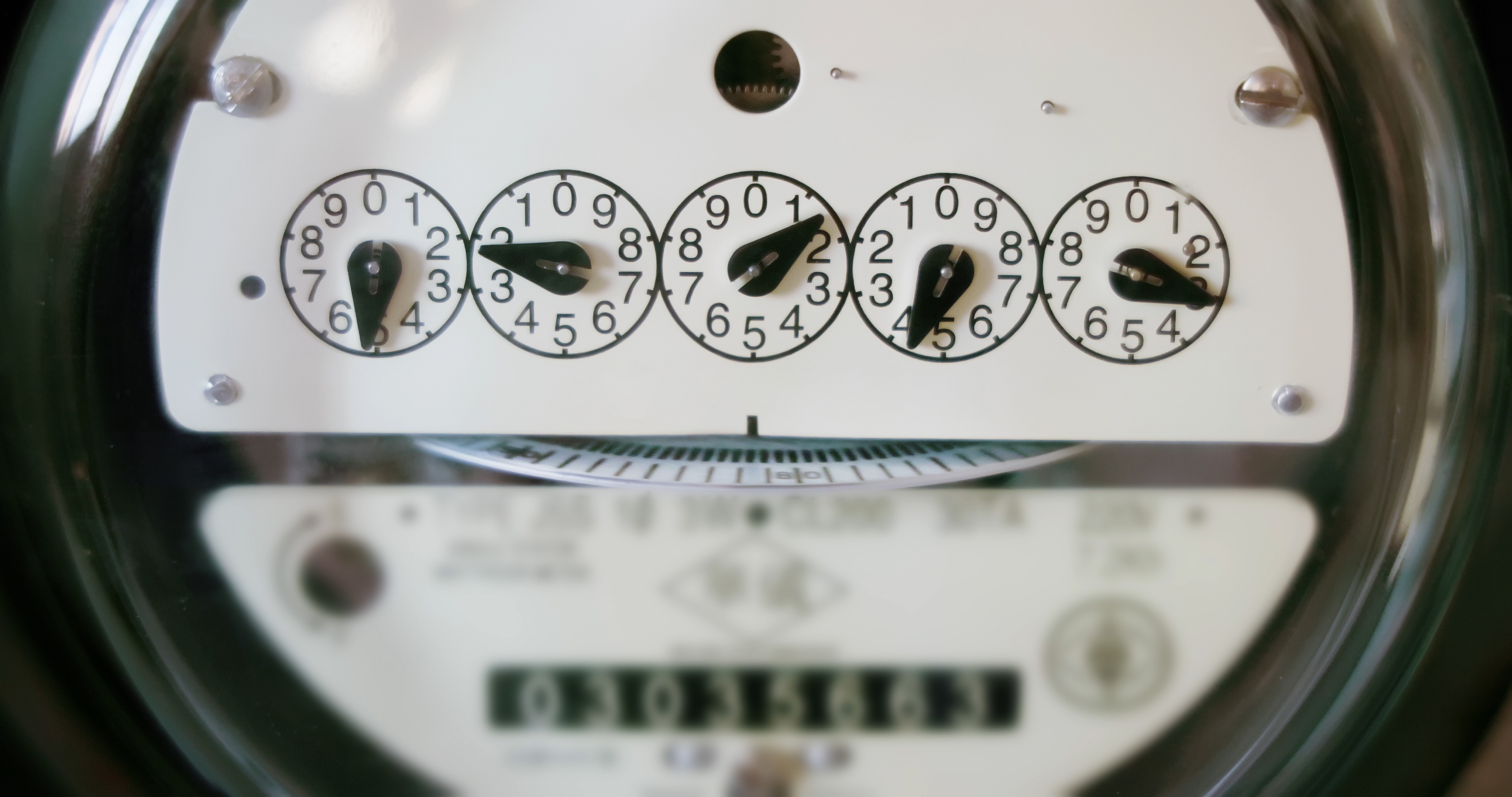
Senior care facilities run 24 hours a day, 365 days a year. Heating, cooling, lighting, medical equipment, kitchen operations, and laundry run continuously. The energy profile is intensive and constant, which creates significant exposure to peak demand charges, the fee utilities levy based on a facility's highest 15-minute consumption window in a billing period.
For a mid-size assisted living campus, peak demand charges can represent 25-40% of the total electricity bill. That charge resets monthly and is not reduced by energy efficiency measures alone. A facility that cuts its overall consumption by 15% through LED lighting and HVAC upgrades but does not address its peak demand profile will see minimal reduction in demand charges.
Battery storage with intelligent dispatch addresses peak demand charges directly, monitoring real-time consumption and dispatching stored energy during high-demand windows to prevent the facility from reaching demand charge setpoints. For a facility spending $300,000 to $500,000 annually on electricity, demand charge reduction of 40-50% represents $50,000 to $100,000 in annual savings, compounding over the life of the system.
On-site solar generation adds a second layer of value, offsetting the most expensive grid power during daylight hours and reducing total energy purchased from the grid. Combined with battery storage and intelligent energy management, the annual energy cost reduction at a senior care facility can be substantial, and the federal Investment Tax Credit, currently at 30% of system cost for solar and battery storage, significantly reduces the net capital investment required.
What Energy Independence Looks Like for an Assisted Living Facility
A well-designed microgrid for an assisted living facility integrates three capabilities that work together.
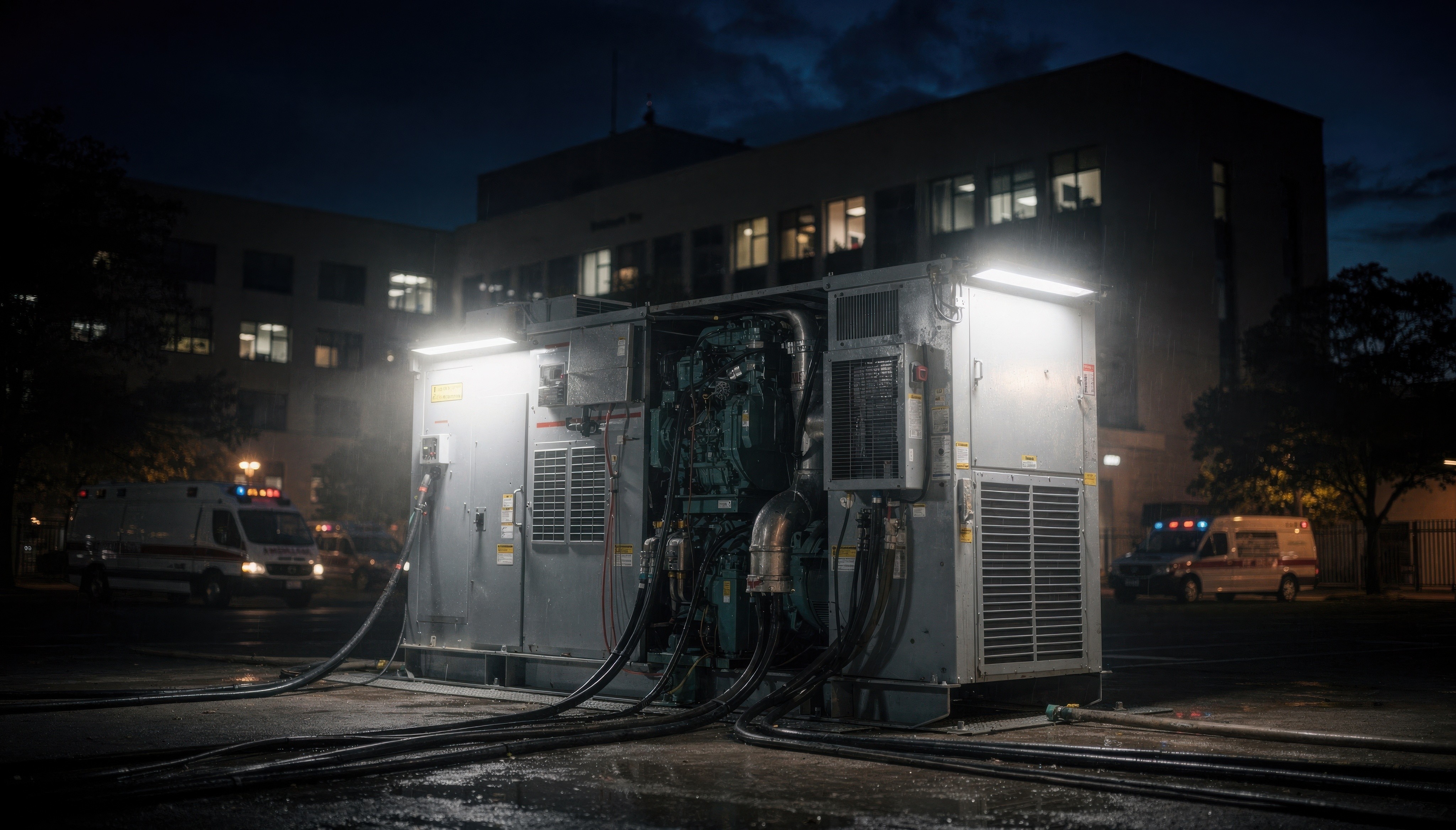
Continuous backup power with seamless islanding. When the main grid fails, the system transitions to island mode within milliseconds, maintaining continuous power to all critical loads: medical equipment, HVAC, refrigeration, lighting, and communications, without the 30 to 45 second gap of a traditional diesel generator startup. For residents on powered medical equipment, that transition gap is not an acceptable risk. Millisecond islanding eliminates it.
Intelligent energy management that reduces operating costs. Solar generation, battery storage, and grid power are coordinated by an AI-driven control system that optimizes for demand charge reduction, energy cost minimization, and resilience simultaneously, automatically, without requiring dedicated energy management staff. The system anticipates demand based on facility schedules and dispatches storage to prevent peak demand events before they occur.
Long-term cost predictability through PPA financing. Power Purchase Agreement structures allow assisted living operators to deploy solar and battery storage without upfront capital expenditure. The facility pays a fixed per-kilowatt-hour rate for microgrid-generated power, locked in below the current utility tariff rate for the term of the agreement, typically 15 to 20 years. This converts a capital investment into a predictable operating expense and eliminates exposure to utility rate escalation over the agreement term.
What NextNRG Brings to Senior Care Operators
NextNRG has executed long-term Power Purchase Agreements for assisted living microgrid deployments, bringing AI-driven energy management to senior care facilities that need both cost reduction and resilience without upfront capital investment.
Our platform integrates on-site energy generation, battery storage, and intelligent control systems into a single coherent energy system. Our AI-driven forecasting engine generates site-specific load and solar generation forecasts that enable proactive battery dispatch rather than reactive response. Our Microgrid Controller provides millisecond islanding capability that protects residents and critical systems during grid events.
For assisted living operators and CFOs evaluating energy infrastructure investments, the conversation starts with a site assessment that quantifies current energy costs, peak demand exposure, outage history, and the financial impact of specific system configurations. That data forms the basis of a business case that can be evaluated against your facility's capital allocation priorities and financing preferences.
Contact the NextNRG team at nextnrg.com to schedule a site assessment for your facility.
Federal incentive availability and program terms are subject to change. Regulatory requirements vary by state and facility type. This post is for informational purposes only and does not constitute legal, regulatory, or financial advice. Consult qualified advisors before making energy infrastructure investment decisions. NextNRG, Inc. (NASDAQ: NXXT).
Don’t Miss Out
Join our newsletter to get latest insights for your brand growth!