California's processing tomato industry will move approximately 9.8 million tons of product through its facilities this season. That crop represents a year of planting decisions, water allocations, input costs, and contracted grower relationships. It arrives at processing plants in a window that typically runs six to eight weeks, from late July through September, and it has to be handled immediately. Tomatoes do not wait.
The same compressed timeline applies across the agricultural processing sector. Wine grape crush runs August through October. Almond hulling and shelling peaks in September and October. Walnut and pistachio processing surges in the fall. Peach and apricot processing runs through summer. Across all of these commodities, the fundamental operational reality is the same: a year's worth of farm economics flows through a processing facility during a period measured in weeks, under time pressure that cannot be extended and at product values that cannot be recovered if something goes wrong.
For agricultural processors, energy infrastructure is not a utility cost center. It is a critical operational dependency during the highest-stakes period of the business year. And in the current grid environment, treating it as anything less is a significant and underappreciated risk.
What Harvest Season Actually Demands from a Processing Facility
The energy profile of an agricultural processing facility during harvest season is fundamentally different from its off-season baseline. The difference is not marginal. It is transformational.
During peak harvest, facilities run at full capacity around the clock. Every piece of equipment is online simultaneously: receiving conveyors, wash lines, sorting equipment, blanching systems, evaporators, sterilizers, freezers, and cold storage. In a tomato processing plant, the receiving line alone can process hundreds of tons per hour. The electrical load during peak operations can be three to four times the facility's off-season baseline, sustained continuously for weeks.
This matters for energy infrastructure in several specific ways.
Demand charges spike to their highest point of the year. Peak demand charges, which are billed based on the facility's highest 15-minute consumption window in a given billing period, reach their annual maximum during harvest season. For a large agricultural processing facility, the demand charges incurred during an eight-week harvest season can represent the majority of the facility's annual demand charge exposure. A facility that has not positioned battery storage to manage those peaks will pay premium rates precisely when it can least afford operational distractions.
Grid stress aligns with harvest season. In California's Central Valley and the broader agricultural processing belt, harvest season coincides with summer and early fall, the same period when the grid is under maximum stress from cooling loads across the region. The combination of peak internal demand and a stressed external grid creates a window where outage probability and outage cost are both at their highest simultaneously.
Product at risk multiplies. During off-season operations, a facility typically holds weeks or months of processed inventory. During harvest, incoming raw product is continuously arriving and moving through various stages of processing. At any given moment, there may be hundreds of tons of product in temperature-sensitive stages of the process: blanched but not yet frozen, sorted but not yet packed, receiving but not yet cooled. A power interruption does not just affect what is in cold storage. It affects everything in the processing pipeline at the moment the lights go out.
The Real Cost of a Harvest Season Outage
The agricultural processing industry does not publicize its outage losses, but the math is not difficult to construct from publicly available data.
California's processing tomato crop was valued at $1.6 billion in 2024, making it the eighth most valuable agricultural commodity in the state. Spread across the state's processing facilities and across an eight-week season, a large tomato processing facility might move $30 million to $80 million in product value through its lines in a single season.
When an outage occurs during peak processing, the direct product losses can be difficult to overstate. Product in mid-process at the moment of the outage, particularly anything in thermal processing stages, may not be recoverable under USDA food safety standards. Cold chain documentation gaps require testing or disposal. Raw product arriving during the outage has nowhere to go and begins degrading immediately. Contracted grower deliveries that cannot be received during the outage window represent grower losses that often come back to the processor in the form of contract disputes or future contract risk.
Beyond direct product loss, the labor cost of an unplanned shutdown during harvest is substantial. A full facility employs hundreds of workers during peak season, many on seasonal contracts. Downtime does not reduce payroll. Restart procedures after an unplanned shutdown require additional hours. Sanitation and food safety verification protocols must be completed before processing can resume.
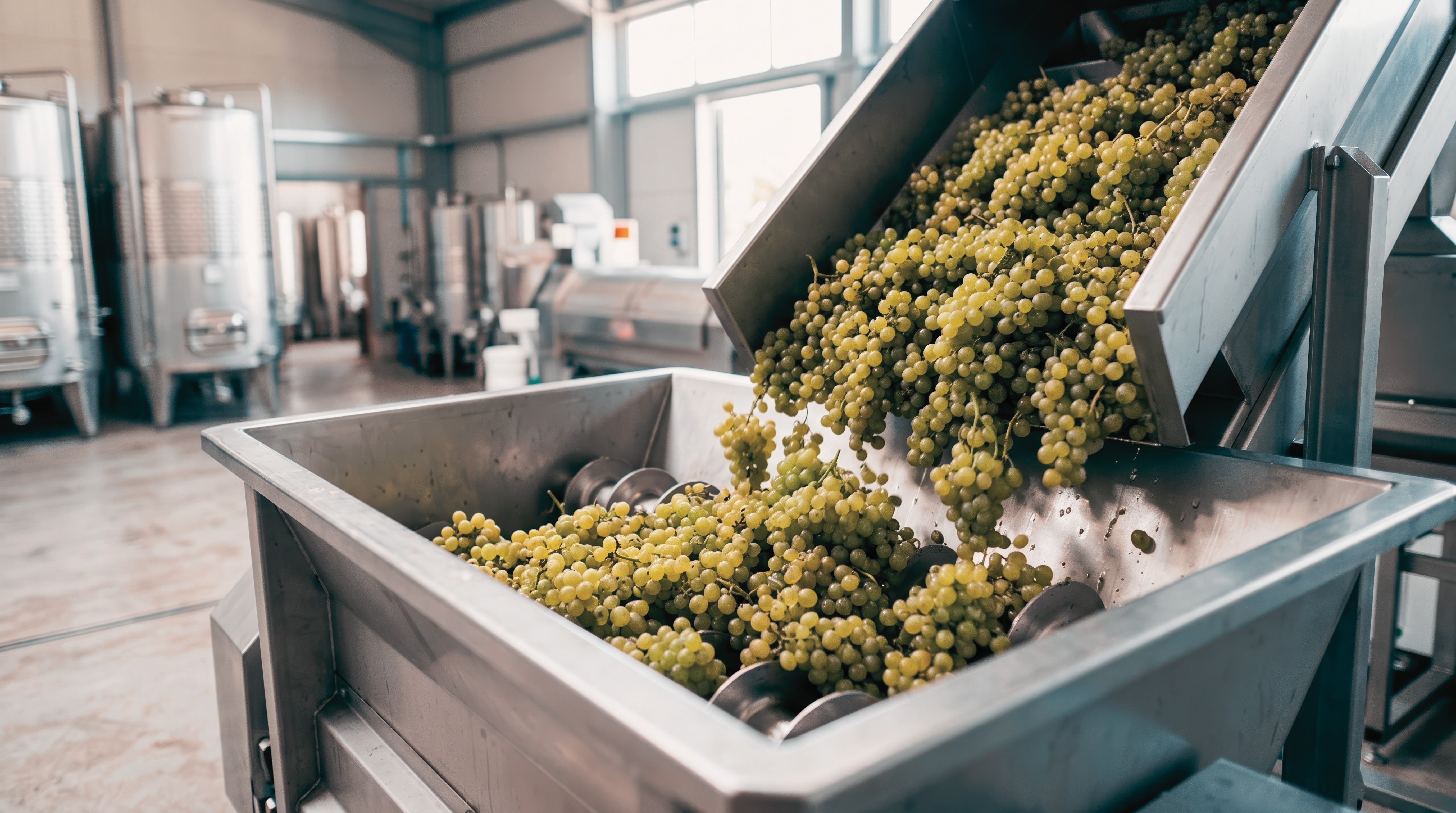
For wine grape crush facilities, the stakes are even more time-sensitive. Grapes at optimal brix and acidity levels have a narrow processing window. A crush facility that loses power for several hours during peak harvest cannot simply restart where it left off. The grapes that arrived during the outage, or that were already loaded into receiving equipment, may not produce the quality outcome the winery contracted for. In premium wine regions, that quality consequence has economic implications that extend well beyond the immediate outage event.
For almond and nut processors, the risk profile is different but equally significant. Almonds require immediate hulling and drying after harvest to prevent aflatoxin development. A processing delay caused by an outage does not just create a logistics problem. Under certain conditions, it creates a food safety problem that can result in crop rejection.
Why Agricultural Processors Are More Exposed Than General Food Manufacturers
General food manufacturers run continuously throughout the year. Their energy risk is real but it is distributed across twelve months of operations. An outage in February is costly but it does not threaten the entire year's commercial outcome.
Agricultural processors do not have that distribution. Their entire year's revenue, and in many cases the entire year's revenue for dozens of contracted growers who depend on them, flows through their facility during a narrow seasonal window. An outage that would represent a manageable one-week disruption at a general food manufacturer can represent a catastrophic outcome at an agricultural processor if it occurs during peak harvest.
This concentration of risk makes the calculus for energy resilience investment fundamentally different for agricultural processors. The question is not whether the cost of a microgrid is justified by average outage probability across the year. The question is whether the cost is justified by the specific risk profile during a 6-8 week window when the consequences of an outage are maximally severe.
Agricultural ratepayers are already on alert as data centers multiply and energy costs for the sector rise. The grid stress that is driving those concerns does not resolve during harvest season. If anything, it intensifies.
The Grid Environment Agricultural Processors Are Operating In
The energy infrastructure that agricultural processors depend on is under more pressure than at any point in recent history. Aging transmission infrastructure, rapidly growing electricity demand from AI and electrification, and interconnection queues that stretch years into the future are converging to create a grid that is less reliable and more expensive than it was a decade ago.
Agricultural ratepayers are already on alert. Data centers multiplying across rural regions are driving up costs for existing ratepayers, and the American Farm Bureau Federation has called for large load tariff structures to ensure data centers pay their fair share rather than shifting costs onto agricultural users.
For processors in California's Central Valley, the heart of the state's tomato, almond, pistachio, and stone fruit industries, this is not abstract. During summer and early fall, when cooling demand peaks and harvest operations run at full intensity, the grid is operating under conditions it was not designed to sustain. On-site generation and storage actually reduces a facility's exposure to this environment by lowering grid dependence during the highest-risk period, rather than adding to the interconnection burden.
What Energy Independence Looks Like for an Agricultural Processor
An agricultural processing facility does not need to eliminate its grid connection to meaningfully reduce its harvest season risk. The goal is to reduce grid dependence during the critical window to a level where a grid event does not cascade into a catastrophic operational failure.
A well-designed microgrid for an agricultural processor integrates three elements that work together to address the specific risk profile of harvest season operations.
On-site solar generation sized for the facility's roof and land area provides a significant portion of the facility's energy during daylight hours, reducing the volume of grid power purchased during the most expensive periods of the day. For Central Valley facilities with large roof areas and strong solar resources, generation can offset 25-40% of annual energy consumption. During harvest season, when the facility runs around the clock, the proportion of solar-generated energy is lower but the cost reduction still compounds meaningfully.
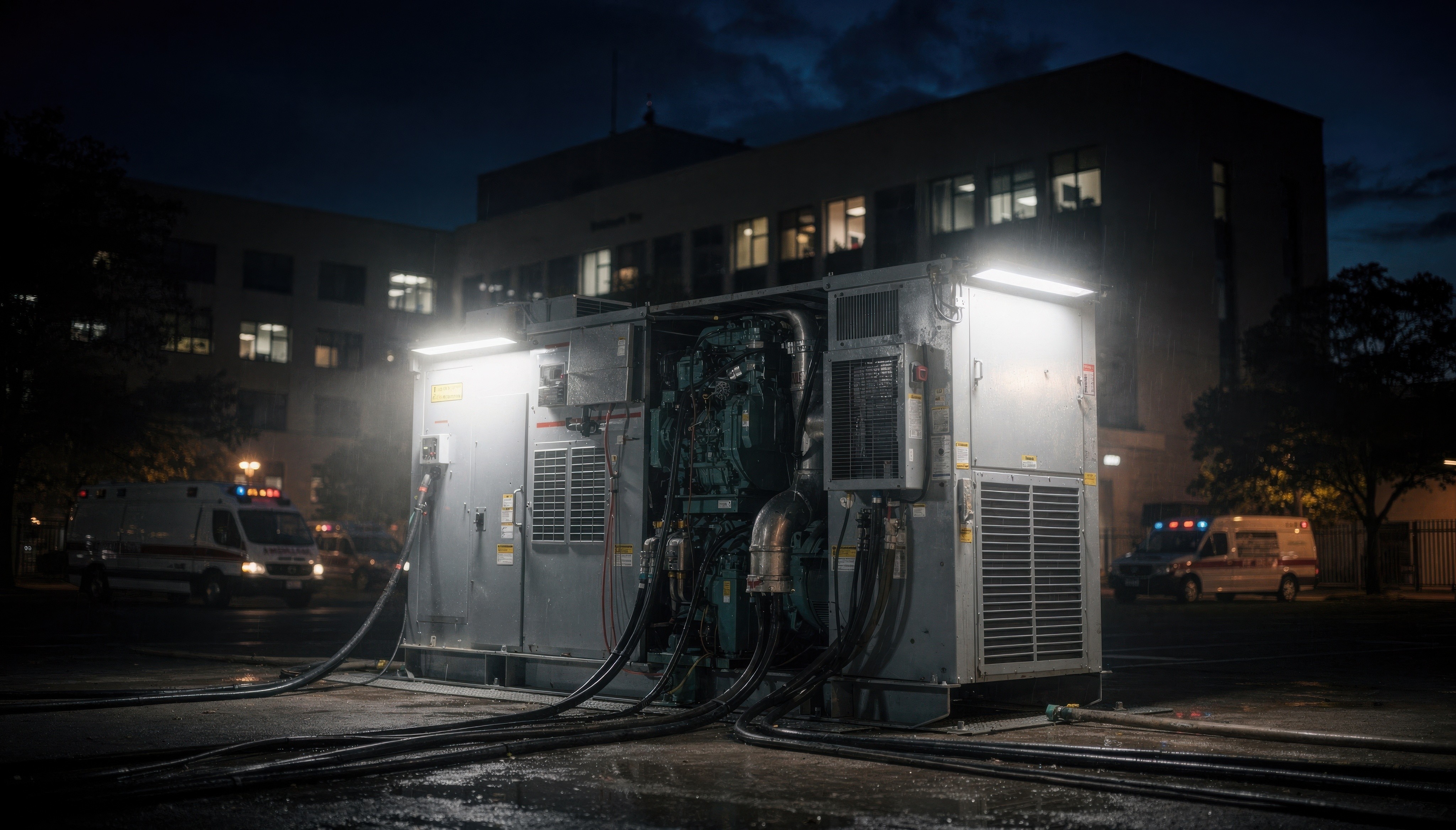
Battery energy storage positioned intelligently ahead of harvest season peak operations serves two distinct functions simultaneously. It caps peak demand charges by dispatching stored energy during the highest-draw windows, preventing the facility from setting new monthly demand charge records during its most intensive operating period. And it provides islanding capability, transitioning the facility to independent operation within milliseconds of a grid failure, maintaining continuous power to all critical processing lines, refrigeration systems, and cold storage without the startup gap of traditional backup generation.
Intelligent energy management is what coordinates these assets in real time during the operational complexity of harvest season. When receiving lines are running at full capacity, when multiple processing stages are operating simultaneously, and when incoming product deliveries are creating unpredictable load variations, the control system needs to anticipate demand patterns rather than react to them. Our AI-driven forecasting engine provides site-specific load forecasts that position battery storage ahead of demand events, ensuring the system is always optimally charged relative to the operational conditions expected in the coming hours.
The Harvest Season Window for Acting
Agricultural processors evaluating energy resilience investment face a timing reality that is more urgent than most industries. The planning, permitting, and deployment timeline for a solar-plus-storage microgrid typically runs two to four months. For facilities targeting protection for the 2026 harvest season, which begins for most commodities in late July and runs through October, the practical window for deploying new infrastructure before peak harvest is extremely narrow.
Facilities that begin the process now can realistically have battery storage systems operational before harvest season peaks. Facilities that wait until July cannot. The incremental cost of acting now versus acting after harvest season is small. The incremental risk of waiting is not.
Federal incentives remain available for projects initiated this year. The Investment Tax Credit covers 30% of solar and battery storage system costs, with additional adders available for qualifying geographies and domestically manufactured equipment. Power Purchase Agreement financing structures allow processors to deploy these systems without upfront capital expenditure, making the economics accessible even for operations with constrained capital budgets during a year of rising input costs.
NextNRG's Approach to Agricultural Processing Facilities
NextNRG designs and deploys AI-driven microgrid systems for agricultural processing and food production facilities. Our platform is built for the operational intensity and seasonal demand patterns that define this sector, with AI-driven forecasting that anticipates harvest season load profiles and positions storage optimally before peak operations begin.
Our Microgrid Controller provides millisecond islanding capability that maintains uninterrupted power to all critical processing lines and cold storage the moment the grid fails. It coordinates on-site generation, battery storage, and grid power in real time, automatically managing energy flows across the facility without requiring operator intervention during the operational complexity of peak harvest.
We structure projects to maximize federal incentive capture and work with agricultural processors to develop business cases that account for the concentrated seasonal risk profile that defines this industry.
Contact the NextNRG team at nextnrg.com to discuss what energy resilience looks like for your facility before this harvest season begins.
Source data references USDA National Agricultural Statistics Service 2026 California Processing Tomato Report and California Department of Food and Agriculture commodity valuation data. Federal incentive availability and program terms are subject to change. This post is for informational purposes only and does not constitute investment or financial advice. NextNRG, Inc. (NASDAQ: NXXT).
Don’t Miss Out
Join our newsletter to get latest insights for your brand growth!