Modern microgrids are not defined by any single technology. They are defined by how well generation, storage, power electronics, and software work together under real-world conditions.
This article breaks down the core building blocks of a microgrid and explains how NextNRG’s patented control, inverter, and software technologies play a role at each layer - particularly where reliability, optimization, and seamless operation matter most.
What Makes a Microgrid More Than Just Solar and Batteries?
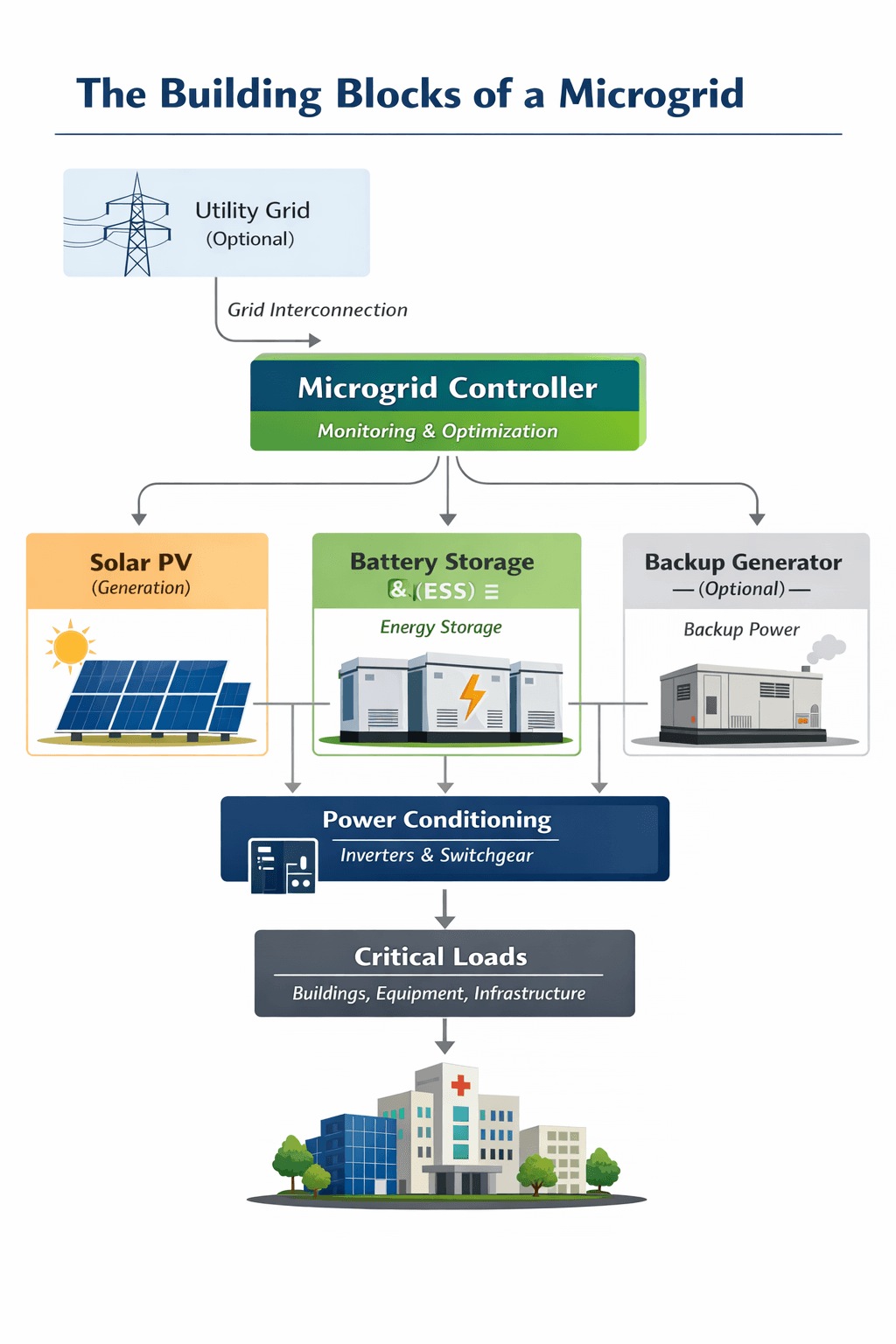
At a glance, many energy systems look like microgrids. They may include solar panels, battery storage, and backup generation. What separates a true microgrid from a collection of assets is coordination and intelligence.
A modern microgrid must be able to:
• Respond instantly to grid disturbances
• Balance generation and load dynamically
• Optimize for cost, resilience, or both
• Operate autonomously, without human intervention
This is where advanced controls, power electronics, and software platforms - like those developed by NextNRG - become foundational rather than optional.
Building Block #1: Solar PV - Generation with Intelligence Built In
Solar PV is often the primary generation source in a microgrid, but its effectiveness depends heavily on how it is controlled and integrated.
In NextNRG-designed systems, solar generation is not treated as a passive resource. Instead:
• Solar output is continuously monitored
• Production is dynamically coordinated with battery state of charge
• Curtailment decisions are made intelligently, not reactively
By integrating solar generation directly into NextNRG’s control and software architecture, solar becomes a dispatchable, system-aware resource rather than a standalone asset.
This approach allows solar to contribute not just energy, but stability and predictability to the microgrid.
Building Block #2: Battery Energy Storage - Reliability Through Intelligent Dispatch
Battery energy storage systems (BESS) are where microgrids begin to behave like infrastructure rather than projects.
In a NextNRG microgrid, battery systems are managed through patented control logic that:
• Optimizes charge and discharge cycles in real time
• Preserves reserve capacity for outage scenarios
• Balances economic objectives with asset longevity
Rather than simply charging when solar is available and discharging when it is not, NextNRG’s software-driven approach evaluates system-wide conditions — including load behavior, grid status, and operational priorities.
The result is storage that delivers:
• Faster response during outages
• Smarter use of stored energy
• Longer system life and more predictable performance
Building Block #3: Microgrid Controllers - Where NextNRG’s Differentiation Is Most Visible
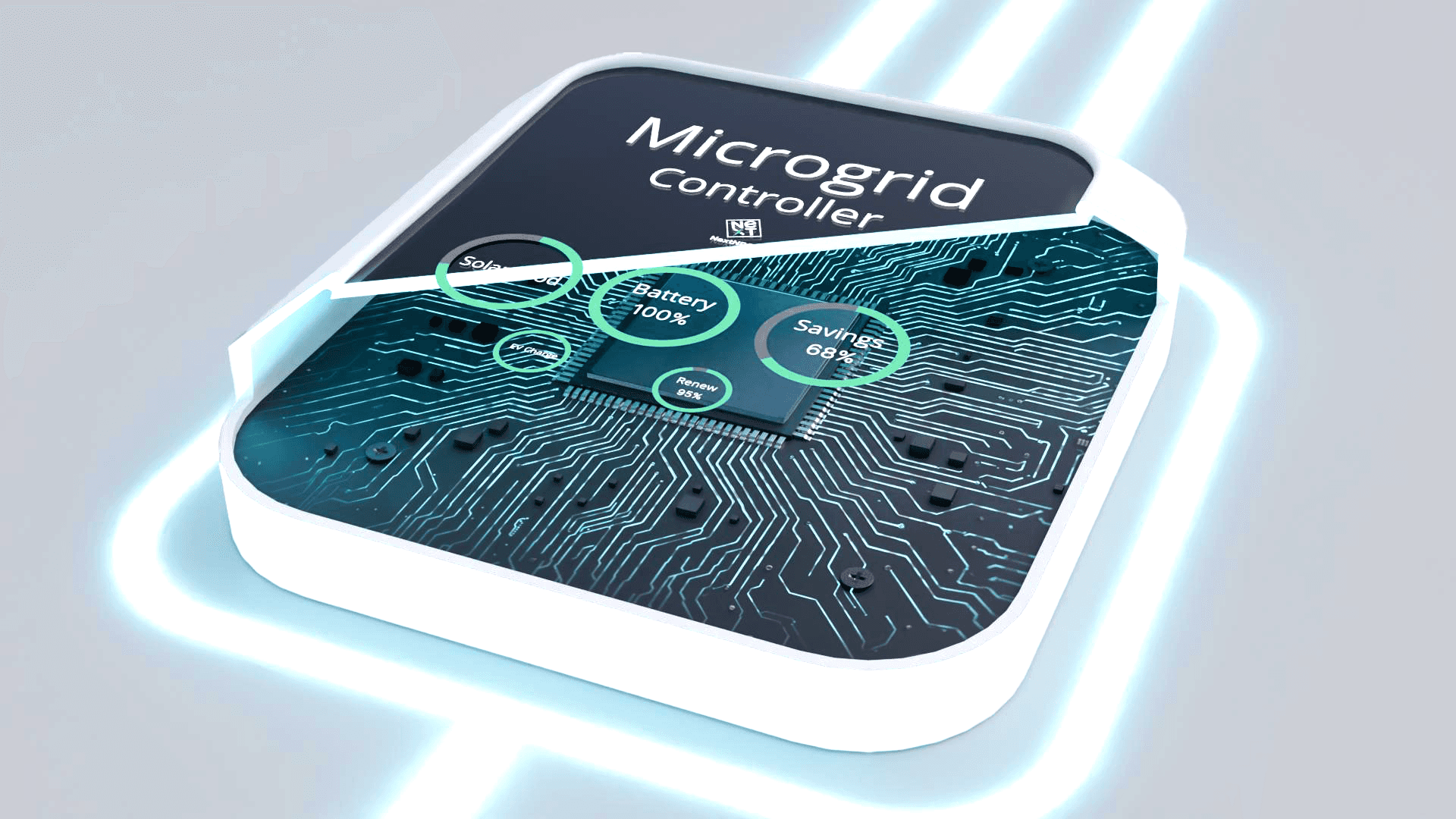
The microgrid controller is the central nervous system of the entire architecture — and this is where NextNRG’s patented technology plays a defining role.
NextNRG’s controller platform is designed to:
• Continuously monitor all distributed energy resources (DERs)
• Make autonomous, real-time operational decisions
• Seamlessly manage transitions between grid-connected and islanded modes
• Maintain voltage and frequency stability without manual intervention
What differentiates NextNRG’s controller is not just visibility, but decision-making authority. The system does not merely report conditions — it actively orchestrates how power flows across generation, storage, and loads.
This intelligence is what enables:
• Millisecond-level response to grid events
• Predictive optimization rather than reactive control
• Scalable deployments across multiple sites or portfolios
Without this layer of control, even high-quality hardware cannot deliver consistent microgrid performance.
Conclusion: From Energy Assets to Intelligent Infrastructure
Microgrids represent a shift in how energy systems are designed and operated. They are no longer static installations - they are adaptive, software-driven infrastructure.
By embedding patented intelligence into controllers, power electronics, and software platforms, NextNRG helps transform solar panels and batteries into systems that can think, respond, and optimize in real time.
That is what defines a modern microgrid.
Don’t Miss Out
Join our newsletter to get latest insights for your brand growth!